

US Iran conflict oil prices impact : Global financial markets reacted sharply as tensions between the United States and Iran intensified, sending stock prices downward while oil prices climbed. The situation has raised serious concerns about energy supply disruptions, inflation, and the broader impact on the global economy.
How US Iran Oil Prices Impact Global Markets
Stock markets across Asia, Europe, and other regions recorded noticeable declines as investors responded to rising geopolitical risk.
Japan’s Nikkei index dropped by 3.5%. South Korea’s Kospi fell 6.5%. European markets also declined. The FTSE 100 in London fell 1.9%, while Germany’s DAX and France’s CAC 40 dropped by around 2%.
These movements show how quickly global stock markets react to uncertainty. You can follow real-time updates from trusted sources like Reuters:
https://www.reuters.com/markets/
Why US Iran Oil Prices Are Rising Rapidly
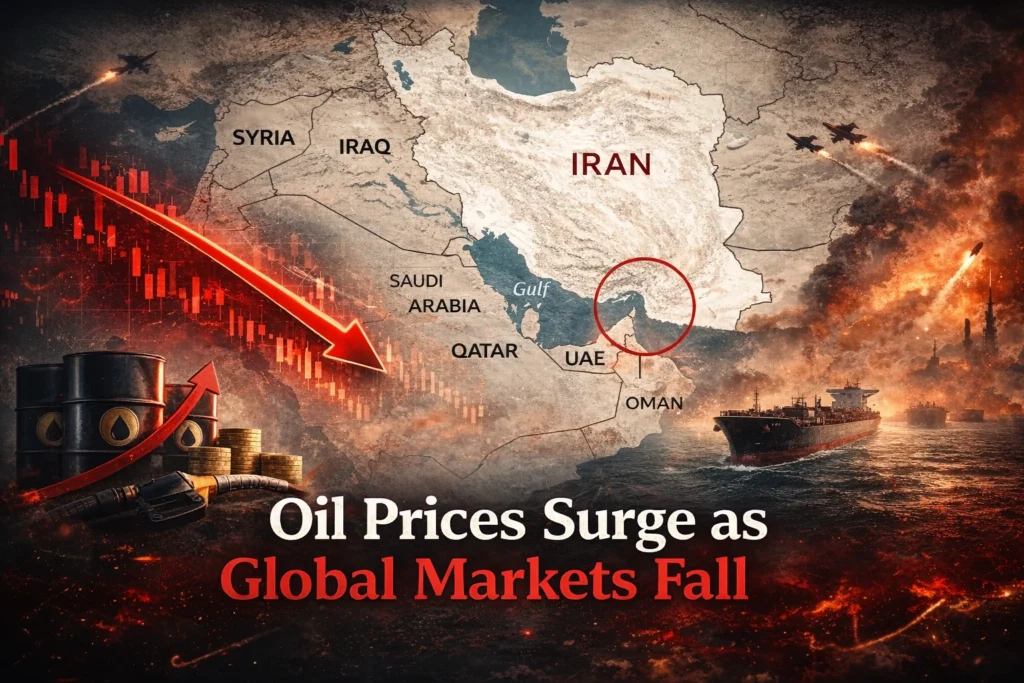
Oil prices increased as concerns grew about supply disruptions. Brent crude rose above $113 per barrel, while US oil prices crossed $100.
This rise is linked to fears around the Strait of Hormuz, a key shipping route for global energy.
Learn more here:
https://www.eia.gov/international/analysis/special-topics/Strait_of_Hormuz.php
Around 20% of the world’s oil passes through this narrow waterway. Any disruption causes immediate price increases.
US and Iran Exchange Strong Warnings
Tensions escalated after the US warned it could target Iranian infrastructure if the strait remains closed. Iran responded by warning of retaliation against regional infrastructure.
These developments increase uncertainty in energy markets and raise the risk of a wider conflict.

Global Energy Crisis Warning
The International Energy Agency has warned that the world could face a major energy crisis.
Official website:
https://www.iea.org
Energy experts compare the current situation to past global crises. Rising fuel prices could impact economies worldwide.
How Rising Oil Prices Affect Daily Life
Higher oil prices affect daily expenses. Transport costs increase. Electricity bills rise. Food prices may go up due to higher delivery costs.
This leads to rising inflation, which affects household budgets.
Learn more about inflation:
https://www.imf.org/en/Publications/fandd/issues/Series/Back-to-Basics/Inflation
Unusual Movement in Gold Prices
Gold prices dropped despite the crisis. This is unusual because gold is often seen as a safe asset.
The decline is linked to:
- Higher interest rates
- Strong US dollar
- Investors selling gold to cover losses
Impact on Countries and Markets
Countries like Japan and South Korea are highly affected because they depend on oil imports through the Strait of Hormuz.
Governments are now focusing on:
- Energy security
- Supply chain stability
- Cost control
What Investors Are Watching
Investors are closely monitoring:
- The status of the Strait of Hormuz
- Oil supply levels
- Political decisions
- Market reactions
For latest updates on oil prices today, you can check:
https://www.bbc.com/news/business-56168689
Future Outlook for US Iran Oil Prices and Markets
There are three possible directions:
- Tensions ease
Oil prices may fall and markets may recover - Situation remains unstable
Markets may stay volatile - Conflict escalates
Oil supply could drop sharply and prices may rise further
The current situation shows how closely global markets and energy supply are connected. Rising tensions between the US and Iran are already affecting oil prices, stock markets, and daily living costs.
You should monitor energy prices and economic updates, as they directly impact your expenses and financial planning.