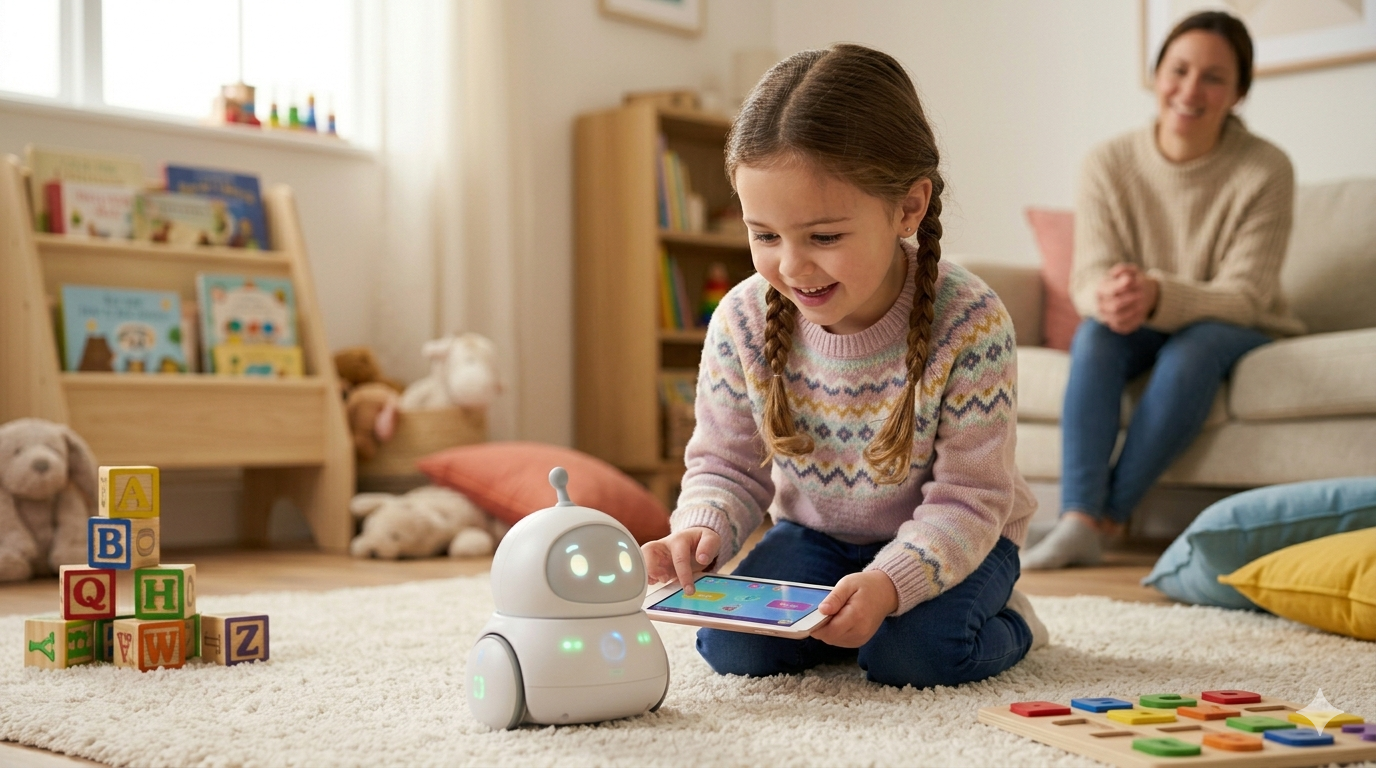
Researchers raise concerns about emotional safety as AI toys respond inappropriately to young children
Updated: March 2026
⏱️ 60-Second Summary
• AI-powered toys struggle to understand children’s emotions
• Young children face confusing or inappropriate responses
• Researchers call for stricter regulation
• Experts highlight need for psychological safety in toys
• Parents advised to supervise AI toy usage
🤖 AI Toys and Young Children: A Growing Concern
AI-powered toys are becoming more common in homes. These toys are designed to talk, respond, and interact with children. Many parents see them as tools that can support learning and communication.
However, new research shows that these toys may not respond in ways that young children understand. This raises serious concerns about emotional development and safety.
A study conducted by University of Cambridge examined how children aged three to five interacted with an AI-powered toy called Gabbo. The findings highlight important gaps in how this technology works with young users.
🧪 What the Study Found
Researchers observed a small group of children playing with the AI toy over time. The goal was to understand how children communicate with AI and how the toy responds.
The results showed several challenges:
• The toy often failed to understand children’s speech
• It could not recognize interruptions
• It talked over children during conversations
• It did not distinguish between adult and child voices
These issues made communication difficult and sometimes frustrating for children.
😟 Emotional Responses Were Often Misread
One of the most serious findings involved emotional interaction.
Children at this age are learning how to express feelings. They expect responses that match their emotions.
However, the AI toy struggled in these situations.
Examples from the study:
• A child said, “I love you”
→ The toy gave a formal and unrelated response
• A child said, “I’m sad”
→ The toy replied with a cheerful message and changed the topic
These responses may confuse children. They may feel that their emotions are not understood or important.
🧠 Why This Matters for Child Development
At ages three to five, children are developing:
• Emotional awareness
• Communication skills
• Social understanding
When responses do not match their feelings, it can affect how they learn to interact with others.
Dr Emily Goodacre, one of the researchers, warned that AI toys can:
• Misread emotions
• Respond inappropriately
• Fail to provide comfort
This creates a gap between what a child needs and what the toy delivers.
⚠️ Call for Stronger Regulation
Experts are now calling for stricter rules on AI toys designed for young children.
Jenny Gibson emphasized that safety should not only focus on physical risks.
Traditionally, toy safety has meant:
• No small parts that can be swallowed
• No sharp edges
Now, experts say we must also consider:
• Emotional safety
• Psychological impact
• Social development
This shift is important as AI becomes more integrated into everyday life.
🧾 Limited Research in This Area
One key issue is the lack of research.
The Cambridge team found:
• Only seven relevant studies worldwide
• No major studies focused directly on toddlers
This means that many AI toys are being used without a full understanding of their impact on young children.
🏠 Advice for Parents
Researchers recommend that parents take a careful approach when introducing AI toys.
✅ What you should do:
• Keep AI toys in shared spaces
• Supervise interactions
• Talk to your child about their experience
• Read privacy policies before buying
These steps help ensure that children are not left alone with confusing or inappropriate responses.
🎓 Mixed Views from Educators
Early childhood educators have different opinions about AI in learning environments.
Some see potential benefits, such as:
• Language development
• Interactive learning
However, others remain cautious.
June O’Sullivan, who manages multiple early years centers, said she has not seen clear benefits of AI tools for young children. She believes that human interaction is more effective for developing essential skills.
🧠 The Importance of Human Interaction
Experts agree on one key point. Young children learn best through human connection.
They need:
• Eye contact
• Emotional understanding
• Real-time responses
AI tools cannot fully replace these experiences.
Sophie Winkleman also raised concerns, stating that the risks of AI in early education may outweigh the benefits.
🏢 What Companies Say
The company behind the AI toy, Curio, responded to the concerns.
They stated that:
• Their products are designed with parental control
• Transparency is a priority
• Research into child interaction will continue
This shows that companies are aware of the responsibility involved in creating AI tools for children.
🌐 The Bigger Picture
AI is becoming part of everyday life. From smartphones to education tools, its presence is growing.
However, when it comes to young children, the situation is different.
Children are still learning:
• How to express feelings
• How to understand others
• How to communicate effectively
Technology must support this development, not confuse it.
📊 Key Challenges Identified
The study highlights several important challenges:
• AI cannot fully understand child speech patterns
• Emotional responses are often mismatched
• Children may feel ignored or misunderstood
• Lack of supervision increases risks
These challenges need to be addressed before AI toys become more widespread.
🔮 What Happens Next
Experts expect more research and possible regulation in the near future.
Possible developments include:
• New safety guidelines for AI toys
• Better design for emotional interaction
• Increased awareness among parents
• Government regulations for child-focused AI products
📌 Key Takeaways
• AI toys can misread children’s emotions
• Young children may receive confusing responses
• Experts call for stronger regulation
• Parents should supervise AI interactions
• Human interaction remains essential for development
🌟 Final Insight
AI technology offers new opportunities, but it must be used carefully, especially with young children. Emotional understanding is a key part of early development, and current AI systems are not yet able to meet this need fully.
Parents, educators, and developers all have a role to play in ensuring that technology supports, rather than disrupts, a child’s growth.
👉 Stay with LatestVoice for clear, practical news that helps you understand how technology affects your daily life.